
Chinese Lunar New Year 2026: Welcoming the Year of the Fire Horse
Chinese Lunar New Year 2026: Welcoming the Year of the Fire Horse
Chinese New Year, also called Lunar New Year or the Spring Festival, is one of the most joyful and important celebrations in China. It’s a time for family, tradition, and new beginnings. Unlike New Year’s Day on January 1st, the date follows the lunar calendar, which changes every year. In 2026, the Chinese New Year falls on Tuesday, 17 February.
Every Chinese New Year marks the start of a new cycle in the Chinese zodiac, which combines 12 animals with five elements: Wood, Fire, Earth, Metal, and Water. 2026 is the Year of the Fire Horse, a rare combination last seen in 1966 and not expected again until 2086! The Fire Horse is bold, passionate, and full of energy, representing independence, courage, and the drive to make big changes.
Where It All Comes From
The festival has ancient roots, tied to the end of winter and the beginning of spring, a time of renewal, harvest, and family togetherness. One famous legend tells of Nian, a fierce beast that would scare villagers until they discovered that loud noises, bright colours, and fire kept it away. Today, these customs live on in firecrackers, lanterns, and vibrant decorations.
At its heart, the Chinese New Year is about family, honouring ancestors, and welcoming luck, prosperity, and happiness for the year ahead.
The Celebration Timeline
Chinese New Year isn’t just a single day; it’s a festival that stretches over 15–16 days:
6 February 2026 – New Year’s Eve: Families gather for the reunion dinner, the most important meal of the year, and stay up late to welcome the new year together.
17 February 2026: The first day of the New Year — a time for visiting relatives, giving good wishes, and celebrating together.
3 March 2026 – Lantern Festival: The celebrations end with colourful lantern displays, riddles, and sweet tangyuan (glutinous rice balls), symbolising family unity and completeness.
In mainland China, people often enjoy a week-long public holiday, giving them time to travel home and celebrate with loved ones.
Traditions and Customs
The Chinese Lunar New Year is a season filled with vibrant traditions that celebrate family, good fortune, and new beginnings. At the heart of the festival is the reunion dinner, when families travel from near and far to share a feast on New Year’s Eve. The table is filled with symbolic foods — dumplings shaped like ancient ingots to represent wealth, whole fish served for abundance, and many other dishes believed to bring blessings for the year ahead. Alongside the meal comes another cherished custom: elders give children and younger relatives red envelopes, or hóngbāo, each containing money as a wish for luck, prosperity, and protection.
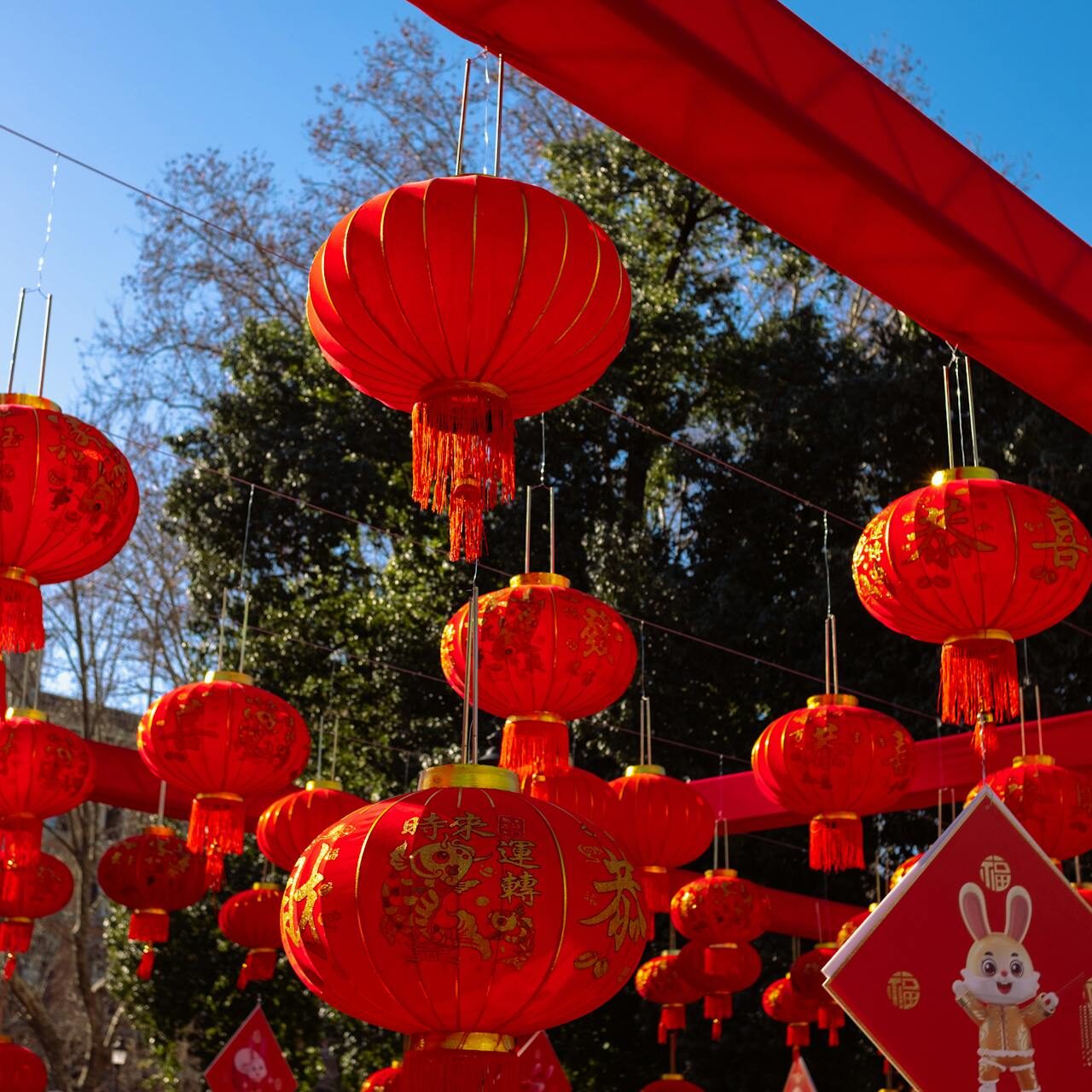
As the celebration approaches, homes and streets transform into bright scenes of red and gold. Lanterns, couplets with auspicious phrases, delicate paper cuttings, and images of the year’s zodiac animal decorate doorways and windows. These symbols are all intended to welcome happiness, ward off misfortune, and invite good luck into the home.
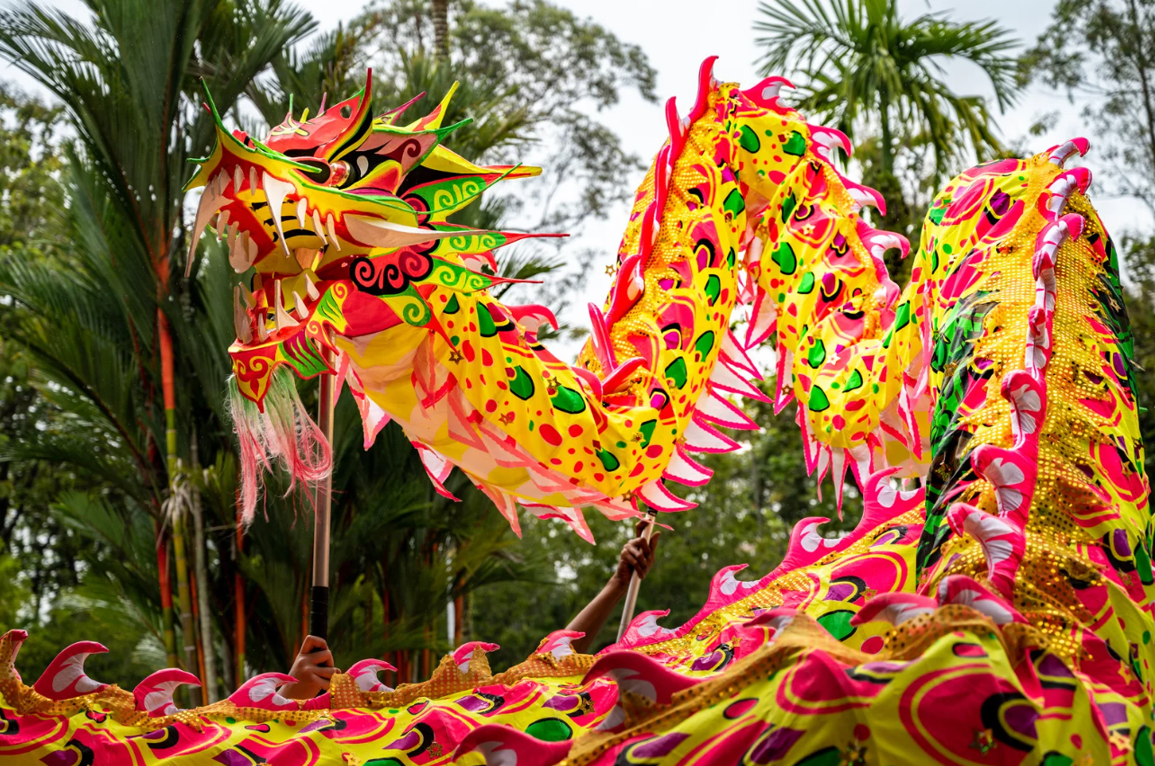
Throughout the holiday period, lively festivities bring communities together. Lion and dragon dances weave through streets, accompanied by the rhythmic thunder of drums and gongs to drive away evil spirits and usher in positive energy. Firecrackers and fireworks, once believed to scare off mythical monsters, continue to light up the sky—although some places, such as Hong Kong, scaled them back in 2026 for safety. The celebrations culminate in the Lantern Festival, where glowing lantern displays, riddles, and bowls of sweet tangyuan mark the end of the holiday. These round, glutinous rice balls symbolize family unity, reminding everyone that togetherness is the heart of the New Year.
Local celebrations
Celebrations in the North East will centre around Newcastle's Chinatown and will begin on Bath Lane at 11:00am. The event has a strong family focus and is open to everyone. You'll find lots of food stalls, arts and crafts as well as fairground rides. Stowell Street, near the archway to Chinatown, will also see displays at 11:30am.
Before that, head to Grey's Monument at 10:45am for incredible performances and then join the parade, complete with drums, dragons, dancing, martial arts and plenty of bangs from traditional firecrackers.
All performances are free, although stalls and the restaurants will not be. Some of the restaurants will be doing special deals and might even have a few 'tasters' available.
The Newcastle celebrations are a wonderful, family friendly event that are full of colour and joy.
Teaching Resources
BBC Bitesize have a collection of useful resources for you and your class to find out more about Chinese Lunar New Year, including:
-
10 interesting facts about Lunar New Year that you may not know
-
Celebrating Chinese and Lunar New Year 2026 (CBeebies - For younger children)
The Institution of Engineering and Technology (IET) aslo have some lovely primary and secondary D&T activities for Chinese New Year, including dragon mask making, Chinese calligraphy and code breaking.
Why It Matters
Chinese New Year is more than fireworks and feasts. It’s a celebration of family, hope, and new beginnings. The rare Fire Horse year of 2026 adds an extra layer of excitement, inspiring bold moves, courage, and transformation. Whether it’s through a lion dance in a bustling street or a quiet family dinner at home, this festival is a reminder of heritage, togetherness, and optimism for the year ahead.
How can we support your school?
Our Inclusive Learning and Achievement Service (ILAS) provide a range of training and support for schools and services. Find out more about how they can support your school or setting.
Article by

Rashda Salamat
English as an additional language Teacher
The Inclusive Learning and Achievement Service (ILAS)
rashda.salamat@northtyneside.gov.uk