
Guru Gobind Singh Ji-The Tenth Sikh Guru and His Timeless Legacy

As one of the world's principle religions, Sikhism can be covered throughout Key Stages 1, 2 or 3. in this article, we take a look at one of the religion's most important figures, Guru Gobind Singh Ji.
Guru Gobind Singh Ji (1666–1708) stands as one of the most influential spiritual leaders in Sikh history. His life and teachings shaped the Sikh faith into a distinct, disciplined, and resilient community. Known for his courage, wisdom, and devotion, Guru Gobind Singh Ji’s contributions continue to inspire millions worldwide.
Early Life
Born on 22 December 1666 in Patna, Bihar, Guru Gobind Singh Ji was the son of Guru Tegh Bahadur, the ninth Sikh Guru. At the tender age of nine, he witnessed his father’s martyrdom for defending religious freedom, an event that deeply influenced his mission.
Founding of the Khalsa
In 1699, Guru Gobind Singh Ji, created the Khalsa Panth during the festival of Vaisakhi. This was a turning point in Sikh history. The Khalsa was a community of initiated Sikhs committed to spiritual purity and social justice. He introduced the Five Ks—Kesh (uncut hair), Kara (steel bracelet), Kanga (wooden comb), Kachera (cotton undergarments), and Kirpan (ceremonial sword)—as symbols of faith and identity.
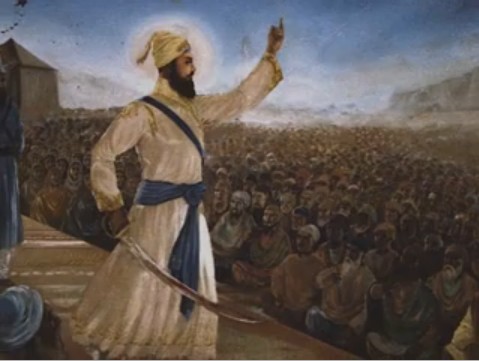
Image courtesy of: https://commons.wikimedia.org
Guru Granth Sahib as Eternal Guru
In 1708, Guru Gobind Singh Ji declared the Guru Granth Sahib as the eternal Guru of the Sikhs, ending the lineage of human Gurus. This decision ensured that Sikhism would remain rooted in its scripture and collective wisdom rather than individual leadership.
Concept of Guru Panth
He also introduced the idea of Guru Panth, envisioning the Sikh community as a spiritual authority. Though rarely invoked today, this concept emphasised collective responsibility and unity.
Legacy
Guru Gobind Singh Ji’s life was a testament to courage and faith. His vision transformed Sikhism into a vibrant, egalitarian, and disciplined tradition. Today, his teachings continue to inspire values of justice, equality, and devotion.

The BBC have a great selection of educational videos and resources on Sikhism in their Bitesize and Religious Studies sections.
How can we help your school?
Our Inclusive Learning and Achievement Service (ILAS) provide a range of training and support for schools and services. Take a look at how we can support your students.
Article by

Shallu Duggal
English as an additional language Teacher
The Inclusive Learning and Achievement Service (ILAS)
shallu.duggal@northtyneside.gov.uk