Supporting EAL learners with maths

Supporting EAL Learners in Mathematics: Understanding the Challenge
Mathematics is often perceived as a universal language, but in reality, it is deeply rooted in linguistic understanding. For learners of English as an Additional Language (EAL), the challenge is not always the mathematical concepts themselves, but the language used to express, explain, and apply them. Many EAL pupils grasp the mathematical ideas but struggle with the vocabulary, instructions, or cultural references embedded in tasks.
This is where our Inclusive Learning and Achievement Service (ILAS) in North Tyneside plays a vital role. ILAS works closely with schools to support ethnic minority pupils learning English, helping them become proficient in speaking, listening, reading, and writing so they can fully access the curriculum—including mathematics.
Mathematical Language Barriers for EAL Learners
Mathematical language can be deceptively complex. Words like table, volume, or mean carry different meanings in everyday English compared to their mathematical usage. Instructions such as estimate, describe, or justify require a strong grasp of academic English.
Strategies to support learners:
- Create a maths word wall featuring key terms with visuals and examples.
- Use gestures, images, and real-life contexts to reinforce vocabulary.
- Collaborate with ILAS to develop bilingual glossaries and sentence frames tailored to your learners.
ILAS offers bespoke support such as promoting multilingual classrooms and buddy training, which can help embed vocabulary in meaningful ways.
Supporting EAL Learners in Maths Through Word Problems
Word problems combine literacy and numeracy skills. An EAL learner may be confident in calculation but struggle to interpret the scenario or identify relevant information.
Supportive approaches:
- Break problems into stages: understanding context, identifying key information, and solving.
- Encourage learners to highlight or annotate keywords.
- Work with ILAS to design culturally inclusive problem sets that reflect learners’ backgrounds.
Cultural Contexts in Maths
Maths questions often include references to money, measurements, or scenarios that may be unfamiliar to EAL learners.
Inclusive practices:
- Adapt examples to be culturally neutral or familiar.
- Invite learners to share examples from their own cultures, making maths more relevant and engaging.
- ILAS can assist with Inclusion Audits to help schools identify and address such barriers.
Encouraging Classroom Talk
Discussion is key to deepening mathematical understanding, but EAL learners may feel hesitant or anxious about speaking.
Ways to build confidence:
- Use paired or group work to encourage participation.
- Provide sentence starters like “I think the answer is… because…”
- ILAS supports schools in creating low-anxiety environments and offers training on buddy systems and alternative communication strategies.

Inclusive Assessment Strategies for EAL Learners in Maths
Traditional assessments may not accurately reflect an EAL learner’s mathematical ability due to language barriers.
Alternative assessment methods:
- Use diagrams, oral explanations, or hands-on activities.
- Teach key question words such as compare, justify, and calculate.
- ILAS can help schools develop inclusive assessment strategies that better reflect learners’ understanding.
Practical Tools for Supporting EAL Learners in Maths
- Use manipulatives and visuals to make abstract concepts tangible.
- Model your thinking aloud to demonstrate problem-solving processes.
- Allow learners to discuss ideas in their home language when appropriate.
- Partner with ILAS for specialist support, including multilingual resources and CPD opportunities.
Final Thoughts
With thoughtful, consistent support, EAL learners can thrive in mathematics. By focusing on language development, cultural relevance, and confidence-building, teachers can unlock learners’ potential—not just in maths, but across the curriculum.
Our Inclusive Learning and Achievement Service (ILAS) is your key partner in this journey. Our team's expertise, resources, and tailored services empower schools to create inclusive, effective learning environments for all pupils.
How can we support your school?
Find out more about the services that our ILAS team can offer your school
Article by
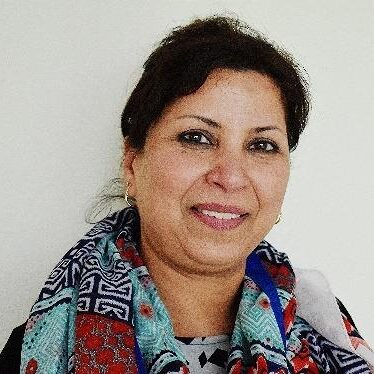
Rashda Salamat
English as an additional language Teacher
The Inclusive Learning and Achievement Service (ILAS)
rashda.salamat@northtyneside.gov.uk