
All Join In! Fostering Engagement and Participation at Storytime

The Educative Power of Picture Books
Storytime is, without question, one of the most magical parts of the early years day and story books are one of the most important resources in the lived curriculum. The best early years language and literacy plans pay close attention to the breadth and balance of story books across the year to keep children engaged. Many educators rightly select books connected to ongoing curricular themes so that knowledge is deepened and vocabulary extended.
In the pursuit of engagement, educators should also consider
- the balance of realism and fantasy in their wider book collections if they are to keep their listeners thinking, learning, questioning and wondering
- the language mechanisms and structures authors use to encourage children to participate in the storytelling process
Reflecting on what is familiar
Some picture books support young learners to better describe and understand the everyday world around them. These books foster engagement because of their familiar themes. Highly skilled authors and illustrators help young children look harder and think more deeply about “the wonderful everyday”. They transform the mundane into the marvellous, the ordinary into extraordinary with ambitious vocabulary and carefully chosen and accessible language structures.
Here are some great examples of this genre.
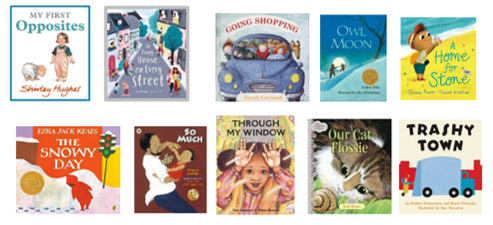
Taking flights of fancy
Other books are portals to new magical worlds, introducing children to the writing of the imagination. They skilfully weave fantasy with what is familiar, moving young learners “out of left field” and embedding rich and delicious language, like gold nuggets, in the simple text.
Here is a selection of great examples of this genre.
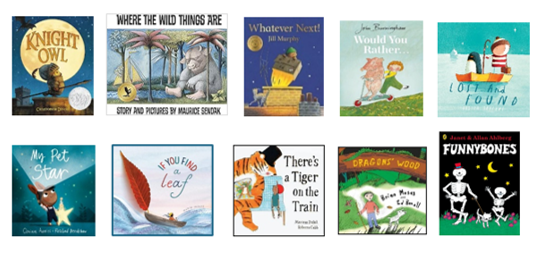
Making new language stick
When further considering the breadth and balance of storytime texts, educators should look out for books which actively promote participation. These books are essential elements in every early years book spine. They ensure that learners don’t just hear new words and phrases but say new words and phrases, mimicking the rise, fall, timbre and pacing of the storytelling voice. These are the books that children are most keen to revisit in book corners, often “reading” sections of the text long before their their decoding skills are fully established. There are four key hooks which transform listeners into co-storytellers.
Rhyming hooks
Children are already atuned to rhyming pairs through exposure to chants, songs and jingles. Some texts exploit this knowledge to very good effect, encouraging listeners to complete phrases alongside the storyteller. As books become favourites, listeners move beyond the final word of each rhyming sentence pair and begin to participate in sections of the text in full.
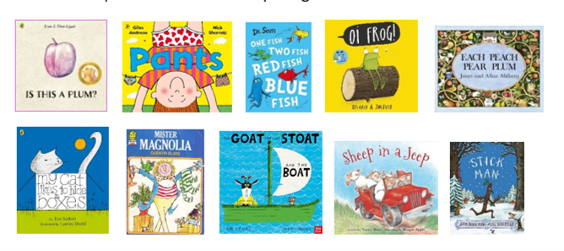
Rhythmic hooks
Other books engage listeners through their pulsating, rhythmic language. The pace and intonation are infectious. Many children absorb whole sections of the text, including new sophisticated words. They feel compelled to join in, particularly if the storytellers make good use of pitch, volume and body percussion.
There are great examples of books with rhythmic hooks.
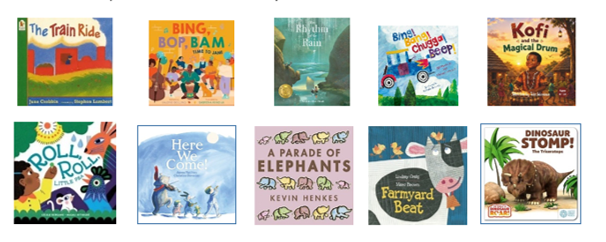
Cumulative story hooks
The shape of the narrative itself can also act as a hook to participation. Cumulative stories rehearse whole phrases as these appear again and again in the text. The illustrations are the prompt for the element of “newness” along the way. After a few exposures children are often able to “read” quite long stories of this type with confidence and enjoyment.
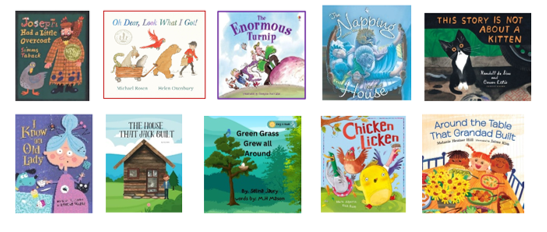
Patterned language hooks
Some authors promote participation through patterned language. As these stories proceed they reveal repeated phrases and predicable structures. Once children become familiar with these they quickly become co-storytellers, using the illustrations as prompts for the new material that sits within the known pattern.
Some examples of this genre are shown.
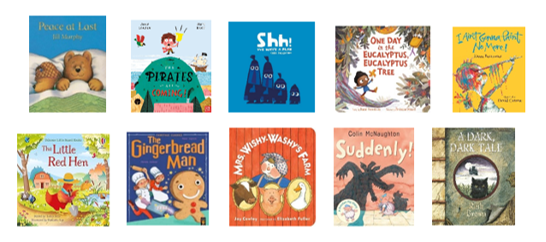
All Join In!
As you refine your storytime programmes and book collections, check you have a good balance of familiar and fantastical themes. This ensures that storytime both resonates with children’s experiences and excites them about possibilities beyond the here and now. Even more importantly, make sure you also audit your books through the lens of their participation-potential. Regular experience of rhyme, rhythm, cumulative structures and patterned language texts will create a culture of collaborative storytelling. This is an excellent foundation for the decoding and encoding journey ahead.
Article by

Catherine Worton
School Improvement Officer
Teaching, Learning, Curriculum and Leadership
catherine.worton@northtyneside.gov.uk