
Every Child Achieving and Thriving: An EAL Teacher’s Perspective on an Invisible Cohort

The Every Child Achieving and Thriving white paper positions itself as a bold step toward a more inclusive education system. It promises early identification, consistent national standards, and a commitment to ensuring that no child is “side-lined”. As an English as an Additional Language (EAL) teacher, I welcome this ambition. Inclusion matters. Early intervention matters. High‑quality teaching matters.
But there is a striking omission: EAL learners, a group of more than 1.6 million pupils in England, are not mentioned at all.
For a document built on the principle that every child should thrive, the silence around EAL pupils is impossible to ignore.
The Paradox: Inclusion Without Visibility
The white paper repeatedly emphasises inclusion, yet it frames vulnerable learners almost exclusively through the lens of SEND, disadvantage, and early years development. These are vital areas, but they do not capture the full diversity of learners who face barriers to accessing the curriculum.
EAL pupils sit in a unique position:
- They are not SEND
- They are not automatically disadvantaged
- They are not a homogeneous group
- Their needs are linguistic, cultural, and academic, and they change over time
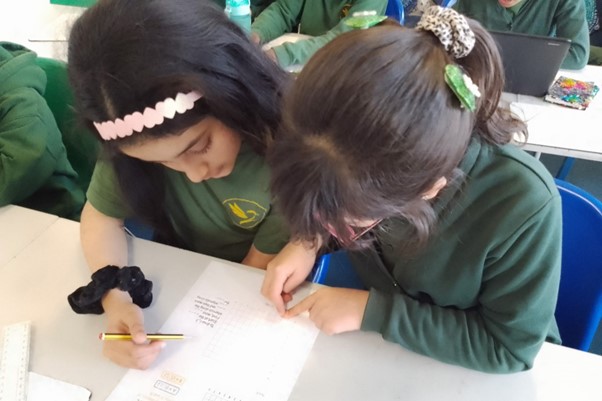
By not naming EAL learners, the white paper unintentionally reinforces a long‑standing issue: EAL needs are often assumed to be “everyone’s responsibility” but no one’s priority.
Why This Matters: Language is a Learning Need
Language proficiency is one of the strongest predictors of educational outcomes. Research consistently shows that pupils with low English proficiency are at higher risk of underachievement across all subjects.
Yet the white paper offers:
- No national EAL assessment framework
- No guidance on identifying language needs
- No expectations for teacher training in EAL pedagogy
- No mention of EAL funding or specialist provision
This leaves schools to navigate EAL support independently, resulting in wide variation in practice and, too often, inconsistent provision.
The Consequences of Omission
Early identification becomes SEND‑centred
The white paper’s early identification model focuses heavily on developmental delay, cognition, and behaviour. But for EAL pupils, the key question is different: Is this a language acquisition issue, or an underlying learning need?
Without national guidance, schools risk:
- Over‑identifying EAL pupils as SEND
- Under‑identifying genuine SEND in multilingual learners
- Missing the window for targeted language support
Inclusion becomes academic rather than linguistic
The paper promotes broad, ambitious curricula, but pupils cannot access a curriculum they cannot yet understand. Inclusion must be linguistic as well as structural.
Teacher training remains uneven
The white paper promises stronger training pipelines, but without explicit reference to EAL, there is no guarantee that language acquisition, cultural competence, or multilingual pedagogy will be included.

What EAL Teachers Know, and the White Paper Doesn’t Say
EAL teachers understand that:
- Language development is not linear
- Proficiency takes years, not months
- Academic language is different from conversational fluency
- Cultural identity shapes learning
- Parents of EAL pupils need tailored communication
- Assessment must be ongoing, not one‑off
The omission of EAL from the white paper risks reinforcing the misconception that language needs are temporary, simple, or secondary.
What Should Have Been Included
If the government is serious about “every child”, the white paper should have included:
- A national EAL proficiency assessment framework
- Clear expectations for EAL pedagogy in teacher training
- Guidance on distinguishing EAL needs from SEND
- Funding mechanisms for EAL support
- Recognition of the role of bilingualism as an asset
- A commitment to data collection on EAL progress
These are not optional extras. They are essential to ensuring equity.
A Call for True Inclusion
Every Child Achieving and Thriving white paper sets out a vision of an education system where no child is left behind. But inclusion cannot be achieved through aspiration alone. It requires visibility, specificity, and policy that recognises the real diversity of learners in our classrooms.
EAL pupils deserve to be named. They deserve to be understood. They deserve to be planned for. And they deserve a national framework that ensures their language needs are assessed accurately and supported consistently.
Until then, EAL teachers will continue to advocate for a group of learners who are central to the fabric of modern British schools, even when policy documents fail to mention them.
How can we support your school?
Our Inclusive Learning and Achievement Service (ILAS) provide a range of training and support for schools and services. Find out more about how they can support your school or setting.
Article by
Rashda Salamat
English as an additional language Teacher
The Inclusive Learning and Achievement Service (ILAS)
rashda.salamat@northtyneside.gov.uk