
Refugee Week 2026: Courage Beyond Borders

Refugee Week 2026 is taking place from 15th – 21st June 2026. It calls on us to:
“Come together and share the courage to welcome, to stand for what we believe in, and to celebrate culture and community – to be joyful, imagine new possibilities, dream, heal, and connect.”
What does courage really look like?
For many of us, it might be something small, such as speaking up in a meeting, trying something new, or stepping outside our comfort zone. But during Refugee Week, we are reminded that for millions of people around the world, courage isn’t a choice. It is part of everyday life.
It often begins with a moment no one ever plans for, the moment when home is no longer safe - Imagine having to leave everything behind. Not just your belongings, but your memories, your language, your sense of who you are. Imagine saying goodbye without knowing when or if you’ll return. Then, stepping into the unknown, unsure where you will sleep, how long the journey will take, or what waits for you on the other side. This is where courage quietly begins, not as something dramatic, but as a simple, powerful decision: to keep going.
Courage every single day.
Many refugees travel through dangerous and uncertain conditions. They face fear, exhaustion, and long periods of waiting. But even in those hardest moments, you see something remarkable: parents comforting their children, strangers helping one another, people holding onto hope when everything feels uncertain. Courage here is deeply human. It is not about being fearless; it is about taking the next step even when you are afraid.
When safety is finally reached, the story doesn’t end. In many ways, it begins again.

Starting over in a new country can feel overwhelming. Everything is different, the language, the systems, the smallest routines we often take for granted. Imagine trying to explain who you are in words you are still learning. Imagine rebuilding your life from the beginning. It takes courage to walk into a classroom, apply for a job, or even say hello to a neighbour when you’re unsure how you’ll be welcomed.
Refugees become students, parents, workers, business owners, and friends. They bring skills, stories, cultures, and ideas that quietly shape and strengthen the communities around them. Their courage doesn’t just change their own lives; it enriches all of ours.
A quieter kind of courage: the courage to hope.
Despite everything they’ve been through, many refugees still dream of a better future for themselves, and especially for their children. A future of safety, stability, and opportunity. This kind of hope is powerful because it refuses to give the past the final word.
Refugees Week is not just about recognising this courage, it’s about reflecting on our own.
It takes courage to challenge assumptions. It takes courage to welcome someone new with kindness. It takes courage to speak up when we see unfairness.
We all have a part to play in creating communities where people feel seen, valued, and that they truly belong.
So, this Refugee Week, let’s do more than just hear stories; let’s connect with them. Let’s recognise the strength it takes to start again, often in silence, often unnoticed and let’s remember that courage isn’t something distant or extraordinary.
It is something deeply human. Because in every refugee story, there is a simple but powerful truth: Even after the hardest beginnings, people can find the strength to begin.
Resources for Refugee Week 2026
If you are interested in recognising Refugee week in your school, take a look at the official Children & Young People Pack by Refugee Week.
This pack features a range of activity ideas and resources for children of all ages that can be explored at school, at home or in community settings. It also includes links to lots of resources from other organisations.
You can also find the general Event Organiser's pack and other resources here.
How can we support your school?
Our Inclusive Learning and Achievement Service (ILAS) provide a range of training and support for schools and services. Find out more about how they can support your school or setting.
Article by
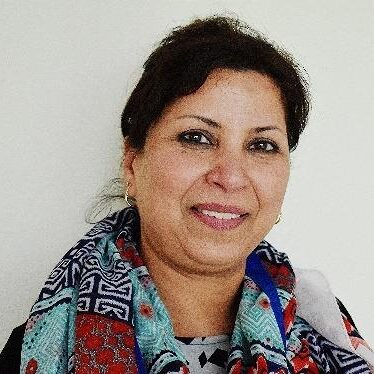
Rashda Salamat
English as an additional language Teacher
The Inclusive Learning and Achievement Service (ILAS)
rashda.salamat@northtyneside.gov.uk